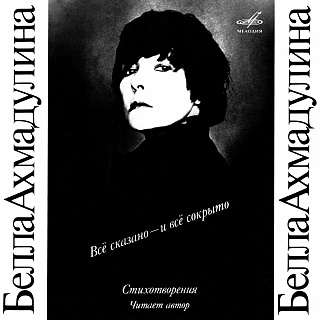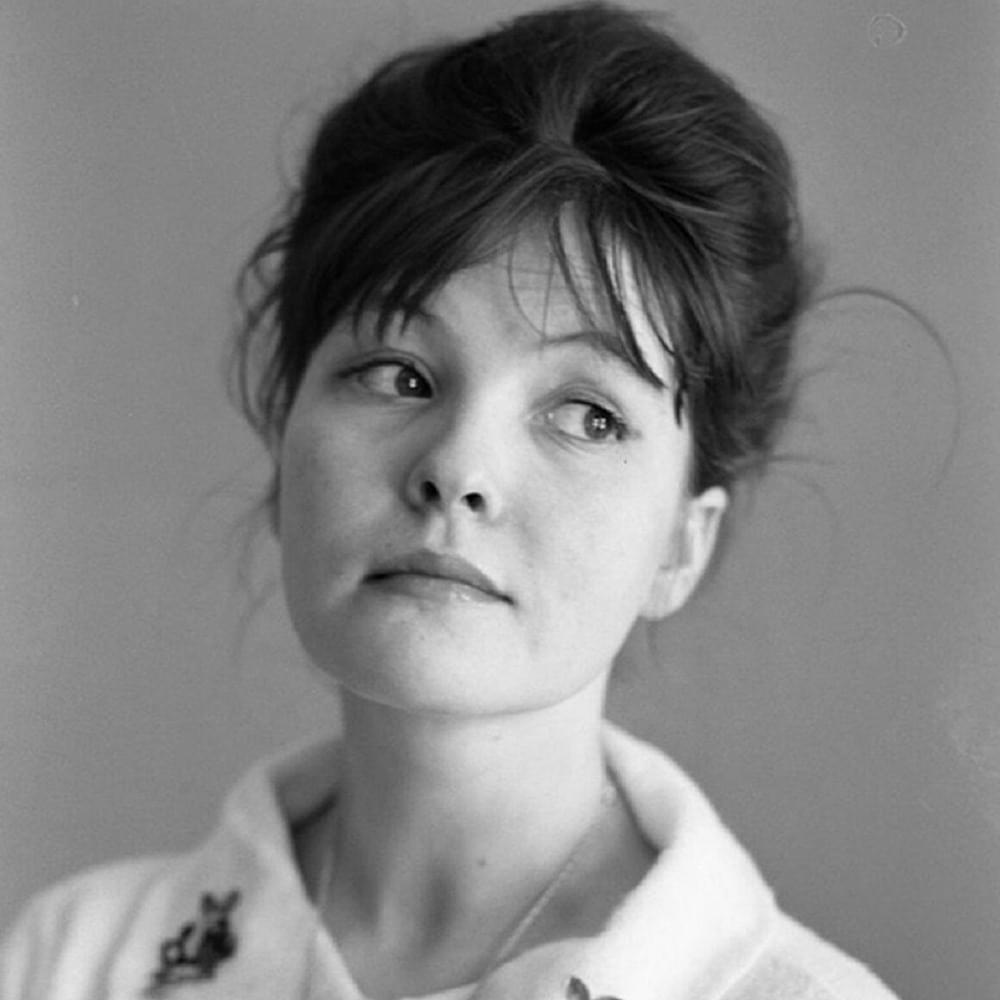

Izabella (Bella) Akhatovna Akhmadulina (April 10, 1937, Moscow — November 29, 2010, Peredelkino, Moscow region) was an outstanding Soviet and Russian poet, writer and translator, one of the largest representatives of the generation of the sixties. She was a member of the Union of Russian Writers, the Executive Committee of the Russian PEN Center and the Society of Friends of the Pushkin Museum of Fine Arts. Akhmadulina was also an honorary member of the American Academy of Arts and Letters. She has received numerous awards for her achievements, including the State Prize of the Russian Federation (2005), the Prize of the President of the Russian Federation (1999), the Bulat Okudzhava State Prize (2004) and the USSR State Prize (1989).
Akhmadulina masterfully combined modernist techniques with classical traditions in her poetry. She is also known for her essays and translations. In 1998 and 2010, she was considered for the Nobel Prize in Literature.
Her main poetry collections include String (1962), Chills (1968), Music Lessons (1970), Poems (1975), Snowstorm (1977), Candle (1977), Mystery (1983) and Garden (USSR State Prize, 1989). Her poetry is characterized by intense lyricism, exquisite forms and a clear connection with the traditions of Russian poetry of the past. Joseph Brodsky praised Akhmadulina, calling her "the undoubted heir to the Lermontov-Pasternak line in Russian poetry."
Evgeny Stepanov, a poet and literary critic, noted that Akhmadulina was a true verse reformer, especially in the field of rhyme. Her rhymes were always unexpected and new, not repeated by other poets. Irina Snegovaya, who attended the Akhmatova Evening in 2008, highlighted Akhmadulina's poems dedicated to Repino and Komarovo. These works are filled with a sense of the past tense, the charm of old dachas and reflections on the fate of their inhabitants.
The main theme of Akhmadulina's work was shame, which accompanied her throughout her life and was associated with her disordered and turbulent life. Bykov believed that this shame reflected a lack of creative will, which sometimes forced her to extend her poems beyond what was necessary, enter into unnecessary relationships and communicate with unnecessary people. According to the biographer, Akhmadulina, with her painful sinfulness and bitter self-condemnation, continued the poetic tradition of Boris Pasternak. In life and in poetry, they were both united by grandiloquence, verbosity, politeness and shyness, which in everyday life seemed to be human traits in the midst of inhumanity and warmth in the midst of an icy world.