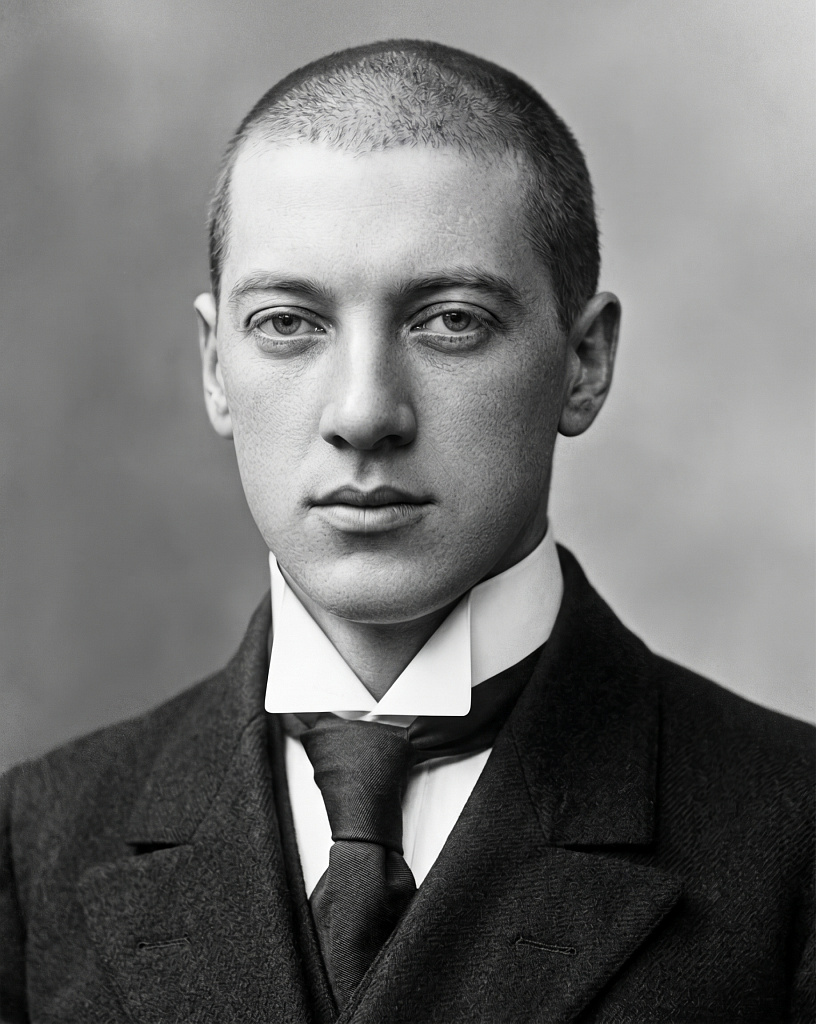
Nikolai Stepanovich Gumilyov (1886, Kronstadt – 1921, Petrograd) was a Russian poet of the Silver Age, the founder of the Acmeism school, a prose writer, playwright, translator, literary critic, traveller, and Africanist. He was the first husband of the poetess Anna Akhmatova and the father of the historian Lev Gumilyov. He undertook two expeditions to eastern and northeastern Africa in 1909 and 1913.
He was executed by firing squad on August 26, 1921, on charges of participating in the anti‑Soviet conspiracy of the “Tagantsev Petrograd Combat Organization.” However, his active involvement in the conspiracy was not confirmed, and on September 30, 1991, he was posthumously rehabilitated by a decision of the Supreme Court of the USSR. The place of execution and burial is still unknown.
Gumilyov’s literary career began during his gymnasium years: his first published poem, “I fled to the forest from the cities…” was published in 1902 in the newspaper “Tiflis Listok”. In 1905, the poet’s debut collection, “The Path of the Conquistadors,” was published with the financial support of his parents. The book was written in the spirit of romantic symbolism and attracted the attention of Valery Bryusov, who became the young author’s main mentor. While studying in Paris, Gumilyov published the journal “Sirius” and released his second collection, “Romantic Flowers,” in 1908; it included the famous dedication to Bryusov, “The Magic Violin.”
From Romanticism to Acmeism: “Pearls” and “Alien Sky” (1910–1912) The poet gained real fame thanks to his collection “Pearls” (1910), in which romantic, exotic images (including the poem “The Giraffe”) were combined with a precise, carefully calibrated rhythm. Disillusioned with the vague mysticism of the Symbolists, in 1911 Gumilyov, together with Sergei Gorodetsky, founded the association “The Workshop of Poets,” and then developed the aesthetic program of Acmeism (the manifesto “The Legacy of Symbolism and Acmeism”). The collection “Alien Sky” (1912) embodies the principles of a new movement: the tangibility of images, the precision of language, the rigor of composition, and the rejection of obscure polysemy in favor of clarity in the material world.
African epic, drama, and war lyrics (1913–1918) Expeditions to Ethiopia provided Gumilyov with a wealth of material: he published the documentary‑fiction work “African Diary,” translated Abyssinian folk songs, and wrote a cycle of poems that later formed the book “The Tent.”
With the outbreak of World War I, Gumilyov’s poetry was enriched by genuine front‑line experience: the essays “Notes of a Cavalryman” and the poetry collection “The Quiver” (1916) were published. At the same time, the poet actively tried his hand at drama, creating the verse plays “Gondla,” “The Poisoned Tunic,” and “Don Juan in Egypt.”
Mature mastery: “The Pillar of Fire” and later works (1918–1921) After 1917, Gumilyov launched a large‑scale literary and educational activity in Petrograd: he gave lectures on the theory of verse at the Institute of Living Speech, headed the “Sounding Shell” studio, and worked at Maxim Gorky’s publishing house “World Literature,” translating the poem “Gilgamesh,” Robin Hood’s ballads, and poems by European poets. The pinnacle of his creative work was the collection “The Pillar of Fire,” published in 1921, shortly before the author’s death. The book brings together the most complex philosophical works (“The Lost Tram,” “The Word,” “Memory,” “The Sixth Sense”), in which the clarity of form characteristic of the Acmeist movement is combined with a profound historiosophical and metaphysical exploration of human existence.