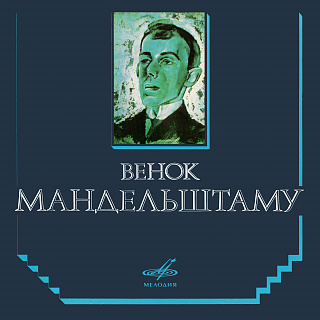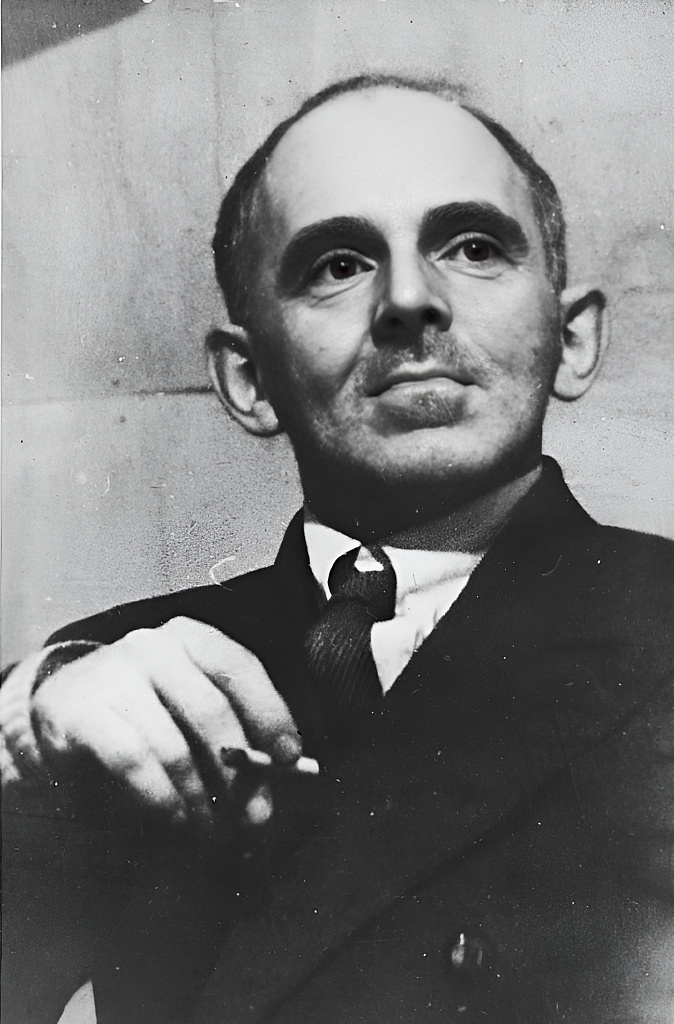
Osip Emilyevich Mandelstam (1891–1938) was one of the foremost Russian poets of the 20th century, as well as a prose writer, essayist, and translator whose creative trajectory was inextricably bound to the tragic upheavals of Russian history.
Mandelstam was born in Warsaw to a merchant family, but soon moved with his parents to Saint Petersburg. He graduated from the prestigious Tenishev School and attended lectures at the universities of Saint Petersburg, Heidelberg, and the Sorbonne. His early poetry leaned toward Symbolism; however, he soon grew close to Nikolai Gumilyov and Anna Akhmatova, becoming one of the founders and theoreticians of a new literary movement: Acmeism. In his seminal manifesto "The Morning of Acmeism" (1913, published 1919), Mandelstam proclaimed the primacy of the tangible, material world, likening the poet's craft to that of an architect and builder.
In 1913, his debut poetry collection, "Stone" (Kamen), was published (with expanded editions following in 1916 and 1923). The book revealed a mature master of austere, sculptural verse: the poet reflects on the grandeur of world culture, architecture, and history ("Notre Dame," "Hagia Sophia," "Silentium," "The Admiralty"). For him, stone is a symbol of eternity—natural chaos transformed by creative will into a cathedral of harmony and intellect.
The turbulence of World War I, the 1917 Revolution, and the Russian Civil War found voice in his second volume of verse, "Tristia" (1922; republished in 1923 under the author's chosen title, "Second Book"). The title drew upon Ovid's sorrowful elegies. This collection is dominated by motifs of farewell to the old world, the collapse of European civilization, and Petersburg as its outermost bastion ("The Twilight of Freedom," "We Shall Meet Again in Petersburg"). Classical antiquity intertwines with modernity, and his poetic idiom grows increasingly associative, intricate, and tragic.
During the 1920s, Mandelstam’s poetic voice suffered a crisis due to the impossibility of conforming to the ideological dictates of Soviet literature. Throughout this period, he turned actively to prose, critical essays, and literary translation. The autobiographical prose "The Noise of Time" (1925) reconstructs the atmosphere of late 19th- and early 20th-century Petersburg; the novella "The Egyptian Stamp" (1928) explores the disintegration of identity amid revolutionary turmoil through the figure of the "little man" Parnok; and the essay "On the Nature of the Word" (1922) formulates his concept of language as a living Hellenic legacy.
A journey to the Caucasus in 1930 revived the poet’s inspiration, yielding the travel prose "Journey to Armenia" (1933) alongside a cycle of poems that celebrated the vital elemental force of life, color, and historical memory. Mandelstam followed this with his foundational theoretical study "Conversation about Dante" (1933)—an innovative reading of the "Divine Comedy" that analyzes poetic speech as a crystal, a dynamic acoustic surge, and living matter.
His breach with the Soviet regime became definitive in November 1933, when Mandelstam wrote his anti-Stalin epigram "We live, deaf to the land beneath us..." (The Stalin Epigram). His first arrest followed in May 1934. Through the intercession of Nikolai Bukharin and Boris Pasternak, an execution order was commuted to internal exile—initially to Cherdyn in the Northern Urals, followed by a transfer to Voronezh.
The Voronezh exile (1934–1937) marked the zenith of Mandelstam’s late work. It produced the three "Voronezh Notebooks"—a masterwork of uncensored lyric poetry marked by the anguish of banishment, bodily decay, and an astonishing surge of creative vitality ("For the resonant valor of ages to come...," "Do not compare: the living cannot be compared...," "Verses on the Unknown Soldier"). These texts survived through the heroic devotion of his wife, Nadezhda Mandelstam, who committed the verses to memory and concealed the manuscripts.
Following the end of his exile, the poet returned to the Moscow region without the right to reside in the capital, facing ostracism, harassment, and destitution. In May 1938, Mandelstam was arrested a second time, sentenced to five years of labor camp imprisonment for "counter-revolutionary activities," and dispatched eastward to the Soviet Far East. On December 27, 1938, he succumbed to typhus and exhaustion in the Vtoraya Rechka transit camp near Vladivostok, where he was buried in an unmarked mass grave.